
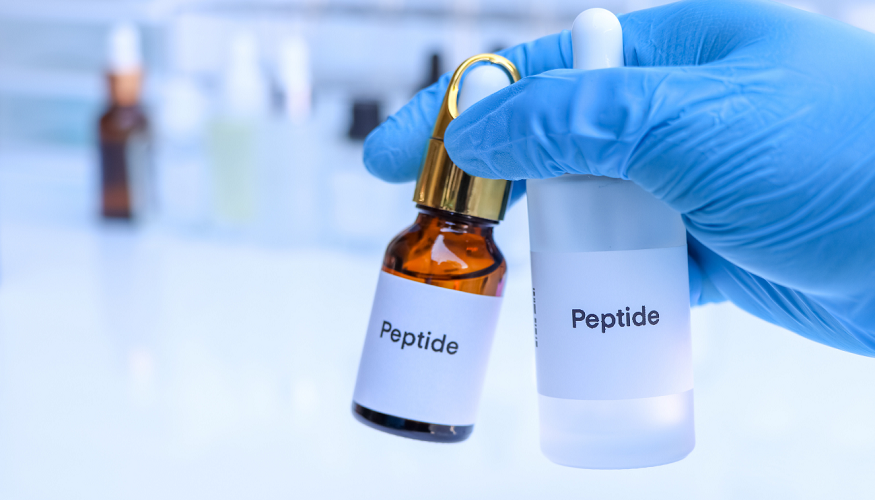
Health studies are beginning to stray away from medication and examine specialized little biomolecules to fulfil specific tasks. The reason peptides are being looked at is that scientists can make them interact with biological processes. This precision is unlocking new opportunities for drug development and diagnostics.
Peptide science is important for understanding why related peptides have enjoyed significance in the field of research laboratories. Peptides are short chains of amino acids (the building blocks of proteins). However, they behave differently from their larger protein counterparts. Their structure and function can be examined in research. In turn, this can lead to more successful strategies for treating health issues.
Why Peptides Matter in Research
An outstanding benefit of peptides is their capacity to interact very specifically with biological targets. This can help researchers study the workings of processes within the body and also help find methods to affect these processes. Peptides are also helpful due to their smaller size, which allows them to be used to study interactions that might prove hard to study with larger molecules.
Peptide structures can be manipulated to determine the impact of the changes on the activity, stability and behaviour of the peptide. These experiments provide a lot of information during the early phase of medical research. These results may then lead to the development of possible treatments or diagnostic technologies.
Supporting More Targeted Drug Development
Peptides are also being employed in scientists’ studies of drugs that target particular pathways instead of a variety of systems. There are some peptides which are already used in nature for various processes like hormone signalling and immunity. Understanding these molecules could help develop or fine-tune peptide-containing molecules for specific therapeutic uses.
Peptide research remains a challenge, though. Some peptides will also be degraded rapidly in the body and perhaps not be available to the tissues where they could help. Scientists are therefore looking into discovering new formulations and delivery methods that might make them more stable and effective.
Read More: How to Choose the Right Supplement Brand for Your Health Goals
New Directions in Peptide Research
Today, peptides are being studied in many laboratories, from molecular structure to the interactions they exhibit in more complex biological environments. This more global strategy is facilitating the discovery of practical applications, but it is also uncovering the range of limitations of peptide-based strategies.
The following are areas of key research:
- Drug discovery
- Diagnostics
- Delivery systems
- Molecular research
The Role of Technology
Scientists have the opportunity to study peptide structures and biological activity in greater detail with the use of improved analytical techniques. Computational techniques can also be used to predict the interactions between various peptide designs and biological targets before the costly process of extensive laboratory testing starts.
Read More: What to Expect During Your First Appointment With an Allergy Consultant
In conclusion, it is unlikely that peptides will replace all pharmaceuticals and scientific tools. However, they do remain an interesting field for investigation in the sciences. Researchers are trying to address issues with stability, delivery, manufacture, and cost. The advancement of these areas has the potential to shape the future of using peptide-based technologies in healthcare.
One thought on “How Peptides Are Advancing Modern Health Research”